
The World War Cycle
The World War I / Prohibition Era (1910-1929)
Home
Links
Search
TimeLog
Bookstore
Email
The 13
Original
American Colonies
 |
Cohorts: G.I. Generation - Hero, Civic Type (1901-1924)
John
Kennedy, Lyndon
Johnson, Richard Nixon , Gerald Ford, Jimmy
Carter, Ronald
Reagan, George
Bush Sr., J. D. Salinger, Allen Dumont, John Eckert, J. Robert
Oppenheimer, Kurt Vonnegut, Walt Disney , Jimmy Stewart,
John Wayne, Katherine Hepburn, Ann Landers, Bob
Hope, Joe DiMaggio, William Westmoreland, Clark
Gable, Linus Pauling, Gary Cooper, Louis
Armstrong, Ed Sullivan, Margaret Mead, Marlene
Dietrich, Charles Lindbergh, John Steinbeck, Guy
Lombardo, Richard Rogers, Ogden Nash, Edgar
Bergen, Lawrence Welk, Dr. Benjamin Spock, Bing
Crosby, Lou Gehrig, Cary Grant, Jimmy & Tommy
Dorsey, Glenn Miller, Dr. Seuss, Johnny
Weissmuller, Count Basie, Alger Hiss, Henry
Fonda, Greta Garbo, Howard Hughes, Lou Costello,
James Michener, Josephine Baker, Laurence
Olivier, Edward R. Murrow, Thurgood Marshall,
Nelson Rockefeller, Milton Berle, John Kenneth
Galbraith, Barry Goldwater, Benny Goodman,
Senator Joseph McCarthy, Jean Harlow, Tennessee
Williams, Hubert H. Humphrey, Lucille Ball, Roy
Rogers, Woody Guthrie, Julia Child, Loretta
Young, Rosa Parks, Jimmy Hoffa, Richard
"Red" Skelton, Jesse Owens, Burt
Lancaster, Archie Moore, Alec Guinness, Joe
Louis, Ted Williams, Satchel Paige, Orson Welles, Ingrid
Bergman, Arthur Miller, Jonas Salk, B. F.
Skinner, Frank Sinatra, Harry James, Gregory
Peck, Walter Cronkite, Lena Horne, Henry Ford II,
Dizzy Gillespie, Pearl Bailey, Betty Ford, Ella
Fitzgerald, Ann Landers & Abigail Van Buren,
Leonard Bernstein, Spiro Agnew, J.D. Salinger,
Jackie Robinson, Nat "King" Cole, Pete
Seeger, Isaac Asimov, Stan Musial, Nancy Reagan,
John Glenn, Jack Kerouac, Judy Garland, George
McGovern, Kurt Vonnegut, Jr., Norman Mailer,
Chuck Yeager, Henry Kissinger, Bob Dole, Alan
Shepard, Jr., Marlon Brando, Truman Capote, [Author's
Father Ivan O. Murray (born in Montana, 1918)]
, Gerald Ford, Jimmy
Carter, Ronald
Reagan, George
Bush Sr., J. D. Salinger, Allen Dumont, John Eckert, J. Robert
Oppenheimer, Kurt Vonnegut, Walt Disney , Jimmy Stewart,
John Wayne, Katherine Hepburn, Ann Landers, Bob
Hope, Joe DiMaggio, William Westmoreland, Clark
Gable, Linus Pauling, Gary Cooper, Louis
Armstrong, Ed Sullivan, Margaret Mead, Marlene
Dietrich, Charles Lindbergh, John Steinbeck, Guy
Lombardo, Richard Rogers, Ogden Nash, Edgar
Bergen, Lawrence Welk, Dr. Benjamin Spock, Bing
Crosby, Lou Gehrig, Cary Grant, Jimmy & Tommy
Dorsey, Glenn Miller, Dr. Seuss, Johnny
Weissmuller, Count Basie, Alger Hiss, Henry
Fonda, Greta Garbo, Howard Hughes, Lou Costello,
James Michener, Josephine Baker, Laurence
Olivier, Edward R. Murrow, Thurgood Marshall,
Nelson Rockefeller, Milton Berle, John Kenneth
Galbraith, Barry Goldwater, Benny Goodman,
Senator Joseph McCarthy, Jean Harlow, Tennessee
Williams, Hubert H. Humphrey, Lucille Ball, Roy
Rogers, Woody Guthrie, Julia Child, Loretta
Young, Rosa Parks, Jimmy Hoffa, Richard
"Red" Skelton, Jesse Owens, Burt
Lancaster, Archie Moore, Alec Guinness, Joe
Louis, Ted Williams, Satchel Paige, Orson Welles, Ingrid
Bergman, Arthur Miller, Jonas Salk, B. F.
Skinner, Frank Sinatra, Harry James, Gregory
Peck, Walter Cronkite, Lena Horne, Henry Ford II,
Dizzy Gillespie, Pearl Bailey, Betty Ford, Ella
Fitzgerald, Ann Landers & Abigail Van Buren,
Leonard Bernstein, Spiro Agnew, J.D. Salinger,
Jackie Robinson, Nat "King" Cole, Pete
Seeger, Isaac Asimov, Stan Musial, Nancy Reagan,
John Glenn, Jack Kerouac, Judy Garland, George
McGovern, Kurt Vonnegut, Jr., Norman Mailer,
Chuck Yeager, Henry Kissinger, Bob Dole, Alan
Shepard, Jr., Marlon Brando, Truman Capote, [Author's
Father Ivan O. Murray (born in Montana, 1918)]
Timeline events: Inner-Driven Era
(1910) The Mann Act prohibits transport of women
across state lines for immoral purposes, Congress requires U. S. Representatives
to report campaign expenses, Anna Pavlova makes her first Ballet appearance in New York City,
Boy Scouts of America and the Campfire Girls are established.
(1911) U. S., Russia, Britain and Japan pass a treaty banning
seal hunting in the North Pacific, Illinois passes first law assisting Mothers with
dependent children, the Supreme Court breaks up Standard Oil and The American Tobacco Co.,
Henry Bacon designs the Lincoln Memorial, the will of Joseph Pulitzer establishes a prize,
fire at the Triangle Shirtwaist Co. exposes dismal working conditions,
Fredrick Taylor publishes "Principles of Scientific Management", Harry Reid suggests
that earthquakes are caused by movement of earth's crust,
Irving Berlin writes "Alexander's Ragtime Band", Bobby Jones wins his first golf title at age 9.
(1912) New Mexico becomes the 47th and Arizona becomes the
48th State, Republicans divide and their convention renominates Taft while
Teddy Roosevelt is nominated to run for the Progressive (Bull Moose)Party
founded by Robert La Follette, Marines land in Cuba
and Nicaragua to protect U. S. interests, Woodrow
Wilson elected President, Congress passes 8 hr. day law for Federal
employees.
(1913) 16th Amendment allows income based taxes, 17th Amendment
provides for direct election of Senators, Federal Reserve Act is passed
forming the federal reserve banking system.
(1914) U. S. - Mexican relations are strained when Mexican
authorities detain American troops at Tampico but several Latin American states arbitrate
until the crisis settles, U. S. proclaims neutrality in widening war in
Europe, Federal Trade Commision established, W. C. Handy writes the
"St. Louis Blues"
(1915) U. S. combines existing maritime services into the
Coast Gaurd, U. S. troops sent to Haiti to protect U. S. property and lives,
(1916) Mexican Revolutionary "Pancho" Villa conducts raids
into U. S. until troops under General John Pershing are dispatched to
chase him back across the border, President Wilson sends ultimatum to
Germany regarding submarine attacks on U. S. ships, Woodrow Wilson reelected
(1917) U. S. obtains Danish West Indies (Virgin Islands)
from Denmark, Puerto Rico becomes U. S. territory, President Wilson
severs diplomatic relations with Germany and then signs declaration of war as
World War I begins for the U. S.,
Congress passes the Selective Service Act, first
movie stars Charlie Chaplin and Mary Pickford,
(1918) U. S. mobilizes for war, U S. troops under General Pershing
attack German lines and help Allies stop German advance, Germany finally
accepts Wilson's "Fourteen Points" and an armistice is signed.
(1919) Wilson seeks ratification of the
Versailles Treaty and membership in the League of Nations from Congress
but they refuse and the U. S. does not sign but the rest of the world does
and World War I ends with the League of Nations established in Geneva, Prohibition
ratified with 18th Amendment and "Bootlegging" becomes a prime activity
(1920) Red scare launched , 19th
Amendment gives women the vote, Warren
G. Harding elected President, US Senate again
rejects the League of Nations, Wilson receives the Nobel Peace Prize,
GM's Alfred Sloan introduces planned obsolescence, election results
broadcast on "new-fangled" radio
(1921) U. S. officially declares World War I ended as post war
recession and high unemployment loom, Ku Klux Klan promotes "White
Supremacy" in the south and racial tensions mount, George Washington Carver
invents peanut butter
(1922) Secretary of the Interior Albert Fall improperly leases
federal oil reserves and precipitates the "Teapot Dome" scandal.
(1923) President Harding dies suddenly and Vice President Calvin Coolidge is
sworn in as President, President Coolidge's first annual address to Congress
is the first official Presidential broadcast.
(1924) Johnson-Reed Act restricts
immigration , Thomas Watson founds IBM, first U. S. marines land at
Shanghai, China to help in their civil war Calvin
Coolidge relected President, J. Edgar Hoover appointed director of the
FBI (originally just the Bureau of Investigation).
(1925) Nellie Ross of Wyoming becomes the first
woman Governor, Col. William "Billy" Mitchell is Court Martialed
for insubordination, Jimmy Walker is elected Mayor of New York,
the Scopes trial , F. Scott
Fitzgerald publishes "The Great Gatsby"
(1926) Congress passes the Revenue Act and the Air Commerce
Act, the Progressive Party wins a few seats in Congress,
(1927) U. S. Marines land in Nicaragua to protect U. S. citizens
during their Civil War, the Grand Ol' Opry on radio, Lindberg flies
the Atlantic, anarchists Sacco and Vanzetti executed
(1928) Herbert
Hoover elected President
(1929) U. S. warships arrive in Shanghai, President
Hoover meets with business leaders to attempt stabilization of the
economy but (in spite of a large cut in the income tax) the stock
market crashes and [The Great Depression starts],
Gov. Huey Long of Louisiana is impeached but not convicted.
Foreign Contemporaries: Gamel Abdel Nasser, Salvador Dali, Vladimir Horowitz, Deng Xiaoping, Jean-Paul Sartre, Aristotle Onassis, Samuel Beckett, Ian Fleming, Jacques Tati, Alistair Cooke, Victor Borge, Akira Kirosawa, Jacques Cousteau, Mother Teresa, Wernher Von Braun, Sonja Henie, Oleg Cassini, Menachem Begin, Ingrid Bergman, Yehudi Menuhin, Indira Gandhi, Ingmar Bergman, Nelson Mandela, Anwar Sadat, Eva Peron, Sun Myung Moon, Federico Fellini, Toshiro Mifune, Ravi Shankar, Pope John Paul II, Mario Lanza, Simone Signoret, Yves Montand, Franco Zeffirelli, Richard Attenborough, Melina Mercouri, Maria Callas, Marcello Mastroianni
Foreign Timeline Events: George V becomes King of Great Britain and Ireland (1910), Revolution in Portugal (1910), Marie Curie publishes "Traite de Radioactive" (1910), Vasily Kandinsky founds the Abstract Expressionist movement (1910), Igor Stravinsky finishes "The Firebird" (1910), Mexican Revolution (1911), Lord Rutherford publishes his nuclear theory of atoms (1911), Roald Amundsen reaches the South Pole (1911), Titanic Sinks (1912),
 Return to the World War Cycle
 Back to the Civil War Cycle
 On to the Present Cycle

| You can support this site by shopping at AllPosters.com |
 |

[Lessons]
Hosted by InMotion
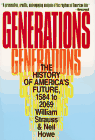 |
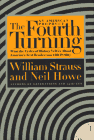
GENERATIONS , William Strauss and Neil Howe, 1991, William Morrow Publisher, New York. The Fourth Turning , William Strauss and Neil Howe, 1997, Broadway Books Publisher, New York. |
 |
| contact webmaster |
| [ TOP ] | Copyright © 2007 [The TimePage] All rights reserved. | [ HOME ] |